Since 1987 · UAE Sports Construction
Squash Court Construction in the UAE
A squash court is the most exacting court we build. Every wall is a playing surface, the floor has to grip without being slow, and the whole box has to be ventilated properly or the ball, the floor and the walls all stop behaving. Raymond Sport builds and refurbishes squash courts across Dubai, Abu Dhabi and the wider UAE to World Squash Federation dimensions — plaster or panel walls, glass back walls, sprung timber floors, moulded out-of-play batters and regulation tin boards. Building sports facilities here since 1987.
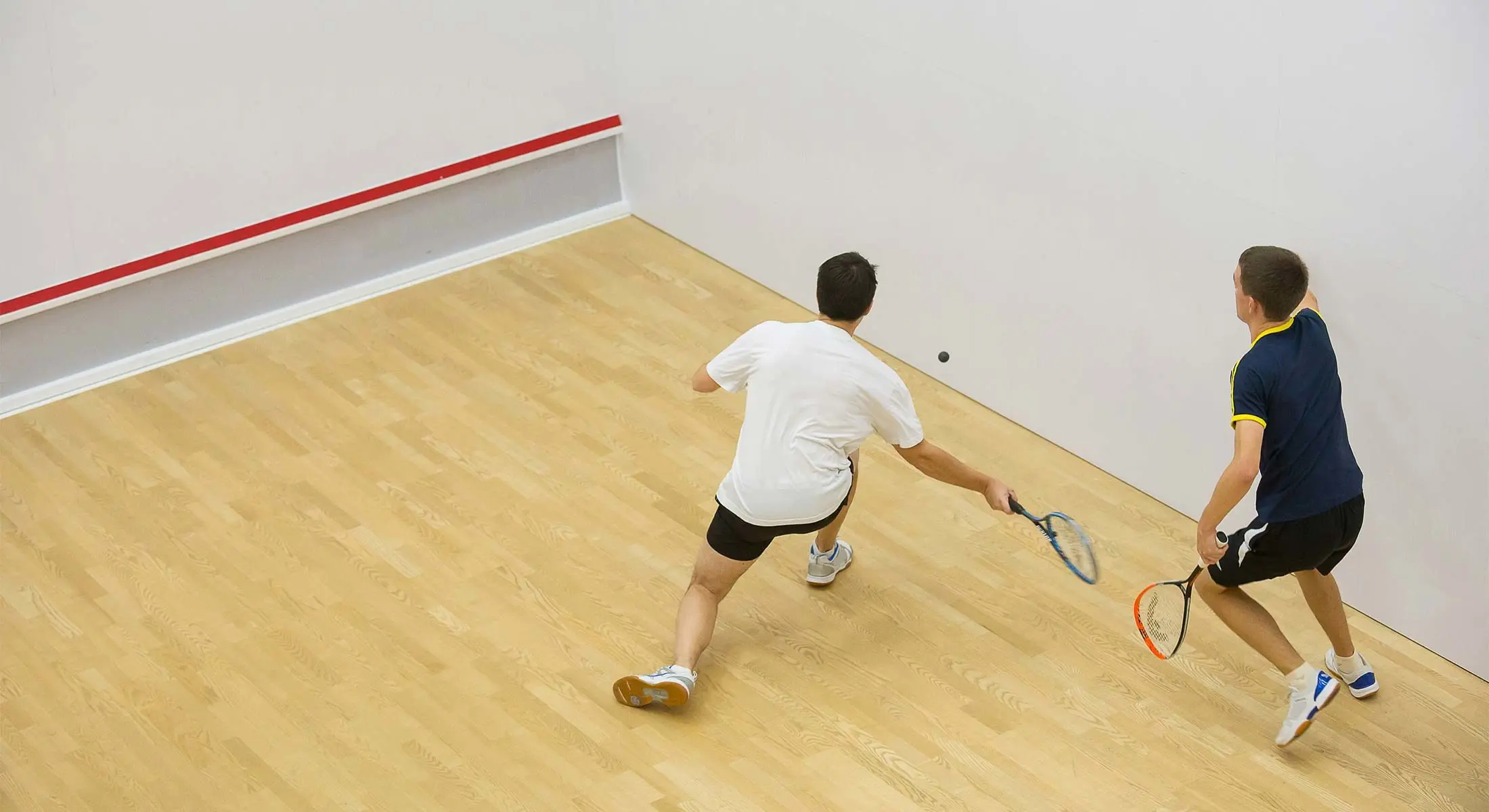
Turnkey Squash Court Construction, Start to Finish
Four walls, a floor and a ceiling — all of which are part of the game. On a squash court these are not separate trades. They are one system, and splitting them across suppliers is how courts end up unplayable.
| Stage | Scope item | Detail |
|---|---|---|
| 01 | Decides Feasibility Site Survey & Feasibility |
Clear height, structural openings, existing services and access. Squash is the one court where ceiling height is usually the constraint, not floor area — plenty of UAE spaces are long and wide enough but cannot take a court because the slab-to-slab height is too low. We establish that first, before anything is designed or priced. |
| 02 | Design & Specification | Court type, wall system, glass specification, floor build-up, lighting layout and ventilation strategy — issued as drawings and a written schedule, not a one-line quotation. |
| 03 | Approvals Support | Material submittals, method statements and compliance documentation prepared for consultant and authority review. |
| 04 | Structural Shell & Openings | Coordination of the enclosing structure, door position and any glass wall openings with the project structural engineer — a glass rear wall is a structural decision, not a finish. |
| 05 | Wall Systems | Plastered render or prefabricated panel walls, set out to WSF dimensions with correct out lines and service lines on every wall. |
| 06 | Glass Back Wall | Toughened glass rear wall or full glass show court, with the supporting structure and door detailing designed as one assembly. |
| 07 | Sprung Timber Floor | Sprung hardwood floor laid, sanded and finished to the correct slip characteristics — grip without being slow. Too slick is dangerous; too matt kills the game. |
| 08 | Tin, Batters & Markings | Regulation tin board, moulded out-of-play batters and court line marking to WSF requirements. |
| 09 | Critical in the UAE Lighting & Ventilation |
Flush, ball-strike-protected luminaires and a ventilation strategy that controls humidity and prevents condensation on the walls and floor. In this climate, this is what decides whether the court is usable in August. |
| 10 | Handover & Warranty | Snag list closed, as-built documentation, maintenance schedule and full warranty pack issued at handover. |
Single point of responsibility. One contract, one team, one company accountable — for every surface in the box.
Squash Court Dimensions and WSF Standards
A singles squash court is 9.75m long by 6.4m wide. Unlike any other court we build, the markings run up the walls as well as across the floor — and the out lines slope from the front wall down to the back.
9.75 × 6.4 m
Singles court
playing area
4.57 m
Front wall
out line height
0.48 m
Tin height
amateur play
| Element | Typical specification |
|---|---|
| Court size | |
| Court size (singles) | 9.75m × 6.4m |
| Court size (doubles) | 13.72m × 7.62m — considerably less common |
| Minimum clear height | 5.64m recommended above the playing area |
| Wall markings | |
| Front wall out line | 4.57m from the floor |
| Back wall out line | 2.13m from the floor |
| Side wall out line | Slopes between the front and back wall heights |
| Front wall service line | 1.78m from the floor |
| Tin height | 0.48m amateur; 0.43m for professional competition |
| Floor markings & surface | |
| Short line | 5.49m from the front wall |
| Service boxes | 1.6m × 1.6m |
| Floor | Sprung hardwood, finished for grip without excessive slowness |
Compliance note. Confirm all dimensions, line heights and tin specification against current World Squash Federation rules and the requirements of the relevant competition — tin height in particular differs between amateur and professional play. Raymond Sport issues a full compliance schedule with every proposal.
Wall Systems — Plaster, Panel or Glass
The wall is the playing surface. How it is built changes how the court plays, what it costs and how it is maintained — and it is the decision that most affects the finished court.
Lower cost
Traditional
Plastered Render Walls
The traditional construction. A specialist multi-coat render applied to masonry, finished flat and hard. Excellent ball response and the most cost-effective route where the enclosing structure already exists. Requires skilled application — an uneven or under-cured render will play badly and crack.
Enquire
Mid range
Most Specified
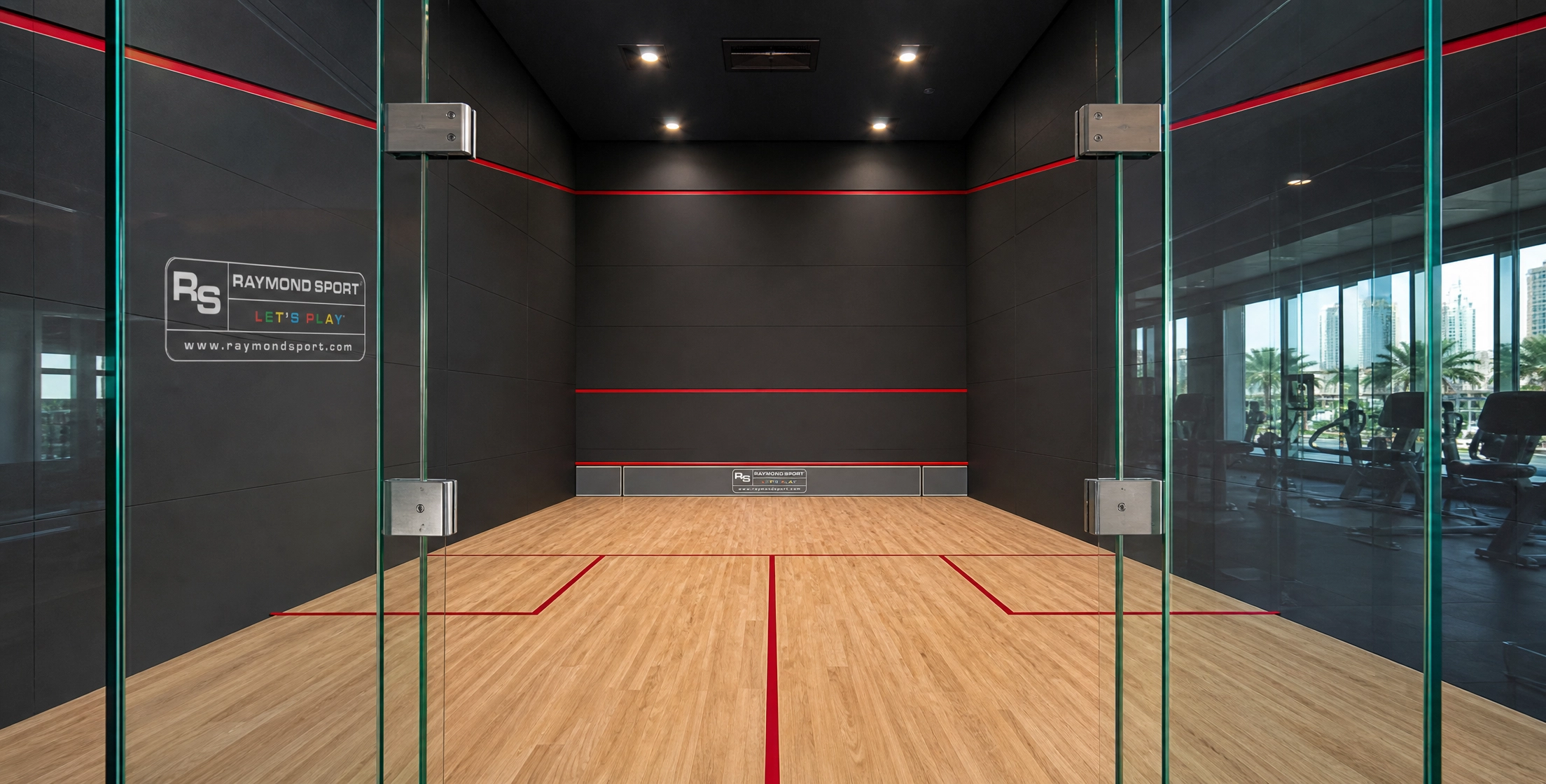
Prefabricated Panel Walls
Engineered panel systems fixed to a supporting frame. Faster to install, dimensionally precise, with consistent ball rebound across the whole wall and far less sensitivity to site conditions than wet render. The usual specification for new-build courts and for refurbishments where the existing plaster has failed.
Enquire
Premium
Spectator Ready
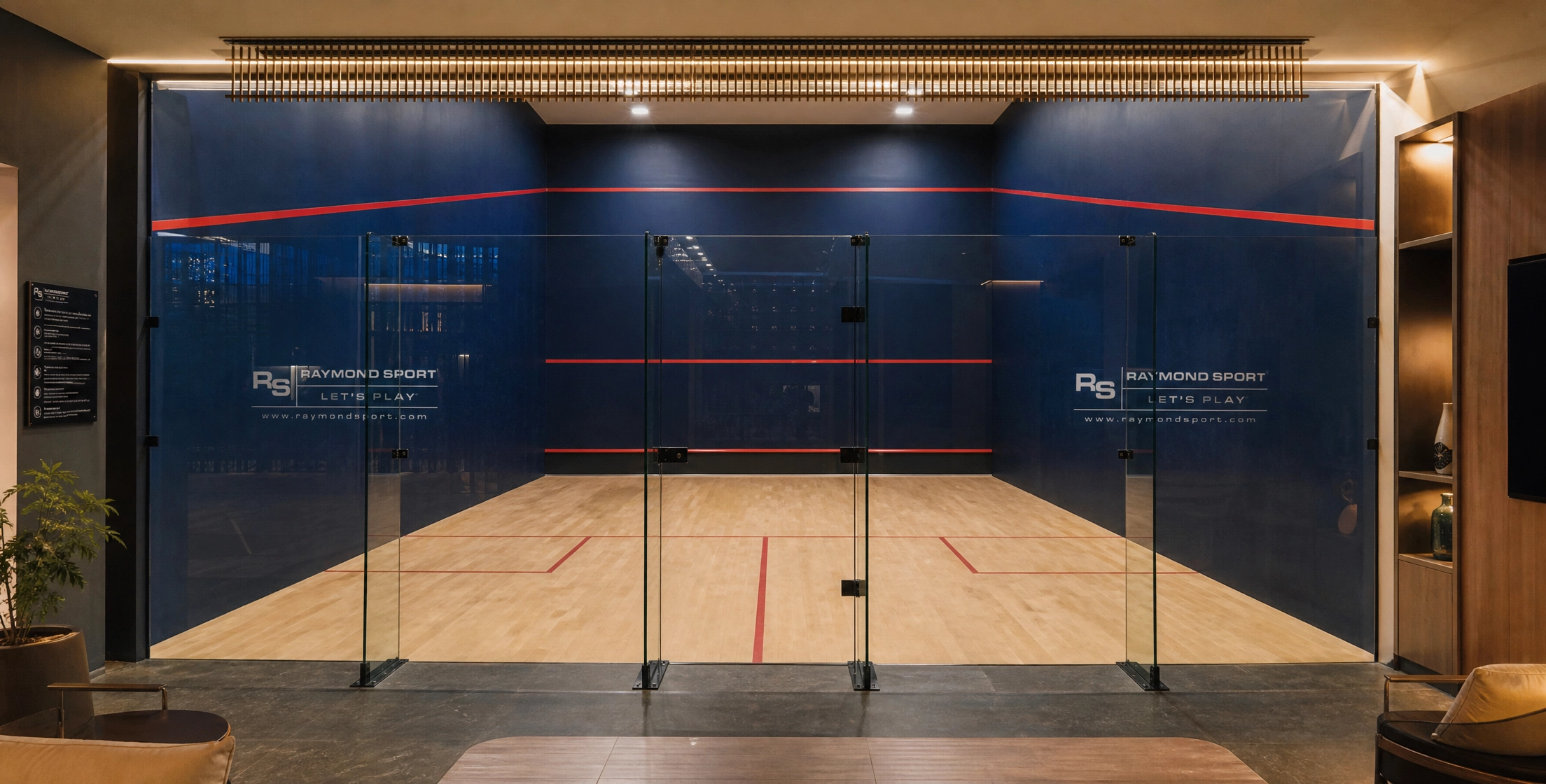
Glass Back Wall
A toughened glass rear wall lets spectators watch and transforms an enclosed box into a viewable facility. Standard for clubs, hotels and any court intended for coaching, competition or member spectating.
Enquire
Highest cost
Flagship
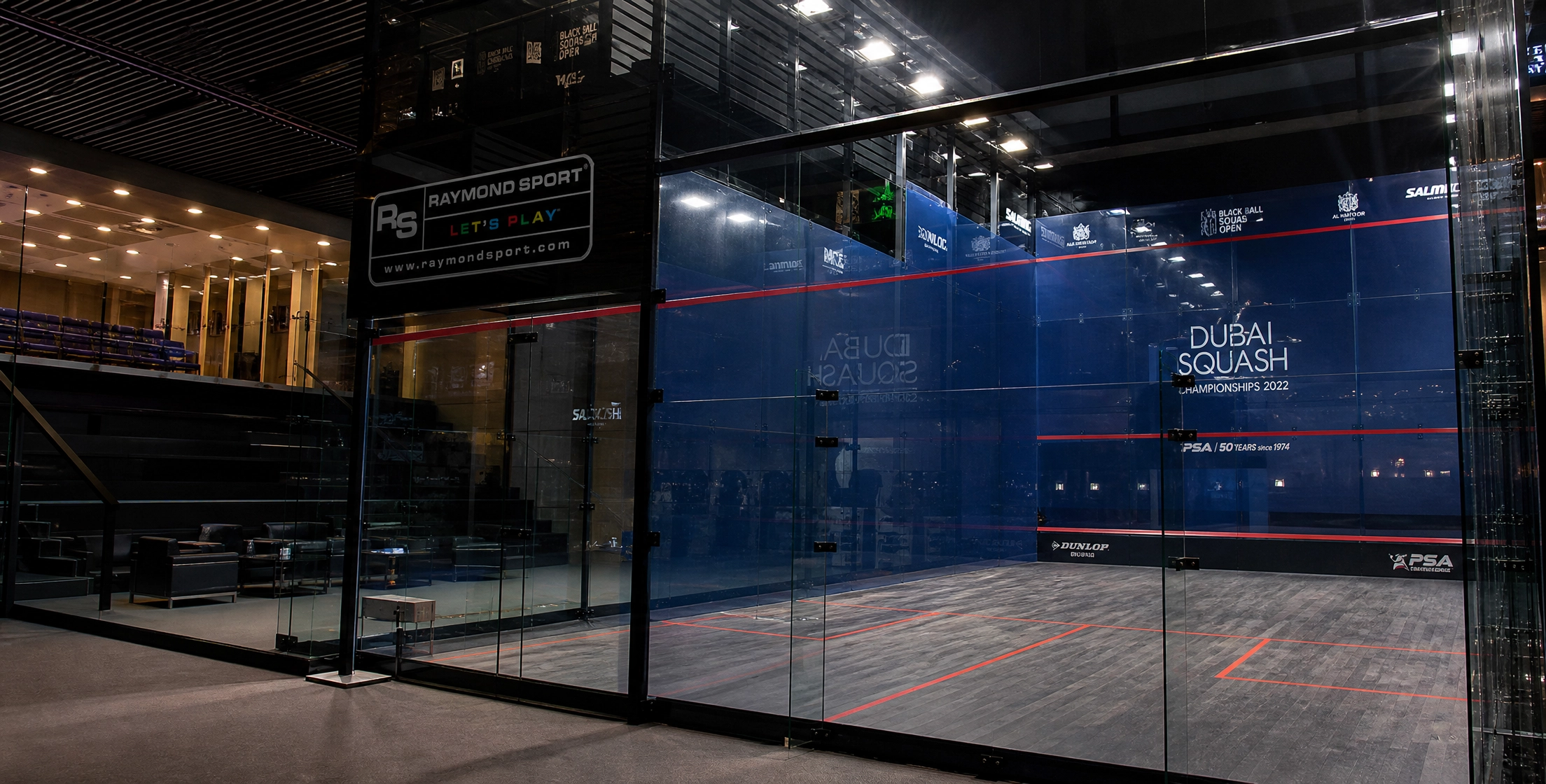
Full Glass Show Court
Three or four glass walls for exhibition and competition play. Dramatic, broadcast-friendly and expensive — specified where the court is a feature, not just a facility. Worth it for a flagship club or a venue that hosts events; unnecessary for everyday play.
Enquire
Fraction of new
Existing Courts
Refurbishment & Re-Plastering
Existing courts get wall repair or replacement, floor sanding and refinishing, new lighting and updated ventilation. Most UAE squash courts are 15–25 years old — built into hotels, clubs and residential towers during the region's first squash boom — and many need attention long before the structure does.
Book a Court AssessmentSquash Court Construction: Frequently Asked Questions
The questions clients ask us most often before building a new squash court or refurbishing an existing one.
What are the dimensions of a squash court?
A singles court is 9.75m long by 6.4m wide, with a recommended minimum clear height of 5.64m above the playing area. The front wall out line sits at 4.57m and the back wall out line at 2.13m, with the side wall out line sloping between them. Doubles courts are larger at 13.72m × 7.62m but are far less common.
How much space do I need to build a squash court?
The playing area is 9.75m × 6.4m, but you need additional space for the wall build-up, structure and access, plus enough clear height. Ceiling height is usually the constraint rather than floor area — many otherwise suitable spaces in UAE buildings cannot take a court because the slab-to-slab height is too low. Send us the room dimensions including that height and we can tell you quickly.
What is the tin height on a squash court?
0.48m for amateur and club play. Professional competition uses a lower tin at 0.43m. Confirm the requirement for your intended level of play — it is one of the few squash dimensions that changes with the standard of the game.
Plaster walls or panel walls — which is better?
Panel systems are dimensionally precise, faster to install and far less sensitive to site conditions, which makes them the usual choice for new courts and for refurbishments. Well-applied plaster render plays excellently and can be more cost-effective where the enclosing structure already exists — but it depends entirely on the quality of the application.
Do I need a glass back wall?
Not for play, but it changes what the facility is. A glass rear wall lets people watch, which matters for clubs, coaching, competition and any court that is part of a members' offering. An enclosed court works perfectly well for private and residential use.
Why do squash courts get slippery in the UAE?
Condensation. A sealed court without adequate ventilation and humidity control will form moisture on the floor and walls in this climate, which is both unplayable and unsafe. It is a design problem rather than a cleaning problem, and the fix is ventilation, not more mopping.
Can you refurbish an existing squash court?
Yes, and most UAE courts are now old enough to need it. Wall repair or replacement, floor sanding and refinishing, new LED lighting and improved ventilation — typically at a fraction of the cost of a new court.
Do you build squash courts outside the UAE?
Yes. We deliver across the GCC, including Saudi Arabia, Qatar, Oman, Bahrain and Kuwait.
Not sure whether your space will take a court? Send us the room length, width and slab-to-slab height. We will tell you whether a squash court fits before anyone visits.
Check My Space